
E-learning: how to make regulatory training more engaging ?
Digital learning offers countless solutions for training employees efficiently and at scale. Management training, soft skills, technical expertise, these are all areas where e-learning remains a highly popular choice. Yet when it comes to regulatory training, identifying the right learning format is still a challenge.
This type of training often suffers from a negative image: unattractive topics, complex vocabulary, unclear concepts, or a lack of understanding of the rule’s purpose.
So how do you overcome these barriers? How can you create an engaging, impactful training program on regulatory topics?
The Teach Up team shares 8 tips to make your regulatory training programs more dynamic and boost learner engagement!
1. Introduce the topic in a positive way
Shift your mindset
The very first step before designing a regulatory training module is to work on mindset. The word “regulation” often brings to mind constraints. To change this perception, it’s essential to introduce the module from a positive angle, framing the rule as a supportive tool rather than a constraint.
Provide context
When training employees or clients on a dry or technical subject, the first step is to add context. Explain how understanding the rule will be an advantage for the learner, or how mastering it will directly benefit their daily work. Concrete situations and specific examples make all the difference.
Reassure learners
Complex topics can intimidate learners right from the start, leading them to begin a course with a negative mindset. To avoid this, use clear, simple, and accessible language on the very first screens of the module.
2. Break training into smaller modules
Reduce content density
Regulatory training is often not only complex but also heavy in content. To support better comprehension, break the training into smaller sections. Two or three well-structured mini-modules are far more effective than one long, overwhelming course.
Choose the right format
Format is key. Rapid learning offers an interesting solution: one mini-module per key concept. A rapid-learning module is short (3–5 minutes), easy to follow independently, and accessible anytime, anywhere.
Build structured journeys
For a more advanced approach, consider a SPOC (Small Private Online Course), an immersive mini-site where you can compile multiple resources (including several mini-modules) into one place for a smoother learner experience.
3. Simplify the message
Use everyday examples
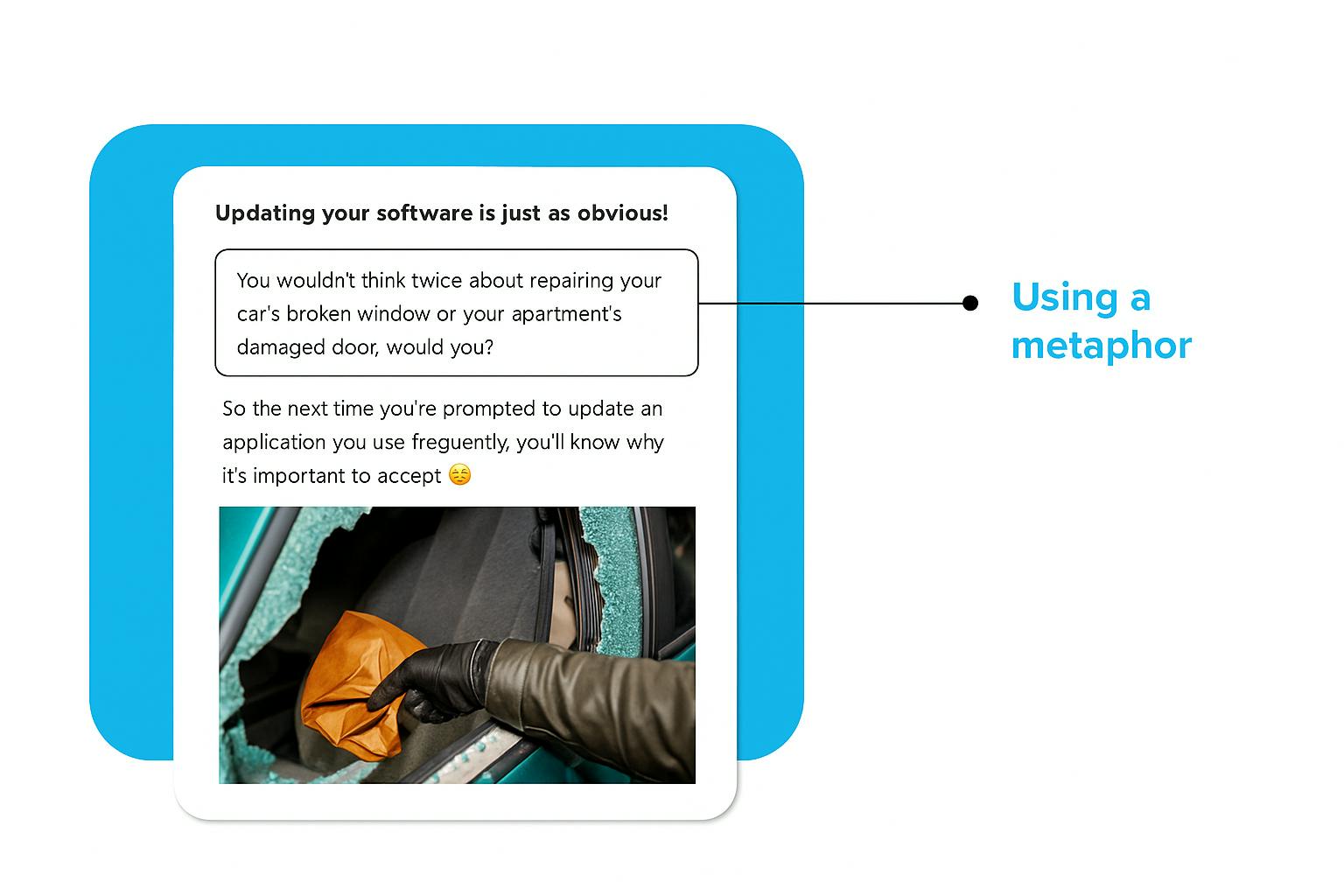
The best way to make complex definitions and rules understandable is through metaphors. Learners grasp concepts more easily when they can relate them to concrete, familiar situations.
Example: A cyberattack is like a burglar breaking into your home to steal personal belongings. This action qualifies as theft. In the same way, your digital data belongs to you, just like a painting or a stamp collection.
A picture is worth a thousand words
When words aren’t enough to explain a rule, illustrations and infographics are excellent tools. Visuals, diagrams, or even the help of a graphic designer can simplify difficult concepts and make the learning process more engaging.
Provide definitions
Regulatory training often involves diverse learners with varying levels of prior knowledge. In addition to visuals, simplify the language wherever possible. For technical terms that can’t be simplified, provide easy access to definitions, such as a glossary or cheat sheet at the start of the module.
4. Work on storytelling
Create a narrative thread
Think of the last time you were so engaged with content that you lost track of time. That level of concentration often comes from storytelling. Design your module like a story, for example, following the daily routine of a relatable character directly affected by regulations.
Break the flow
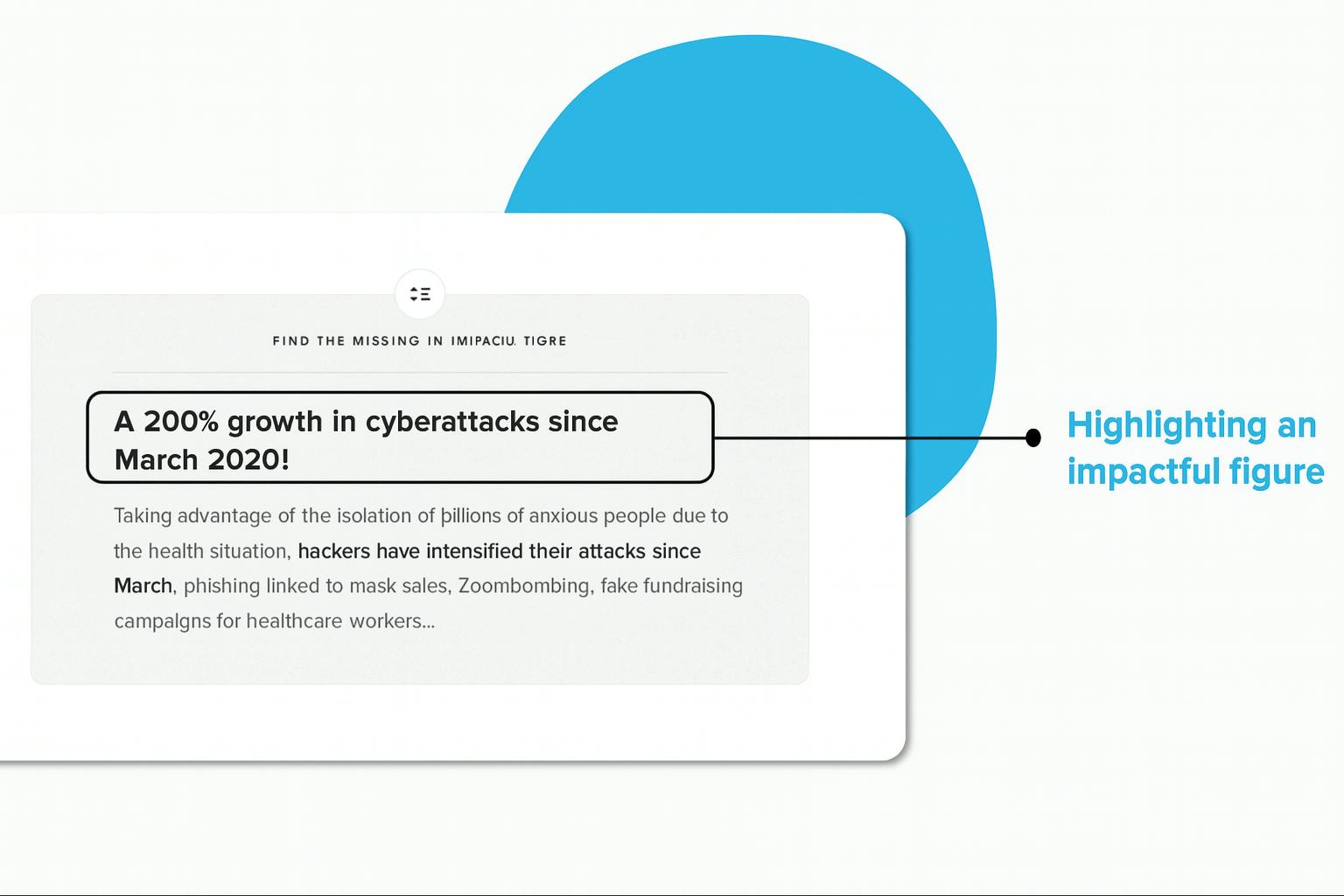
When screens follow one after another, learners may disengage. Re-energize their attention with surprises: unexpected transitions, humor through a GIF, or striking statistics. Small twists help sustain focus.
5. Design the learning experience
Make it visually appealing
Even when the subject matter is complex, design matters. A clean, engaging graphic environment encourages learners to dive into the module with interest and motivation.
Vary the formats
Mix different pedagogical formats throughout the module: text, images, videos, infographics, GIFs. Choose them carefully to support understanding. Globally, focus on learner experience (UX): keep modules short, introductions concise, conclusions impactful, and key points clearly highlighted.
Add elements of surprise
To make regulatory training more playful, integrate fun surprises. Offer a small reward at the end of the module, or engage learners’ auditory sense with sound effects or audio resources.
6. Play with the rules
Create engagement
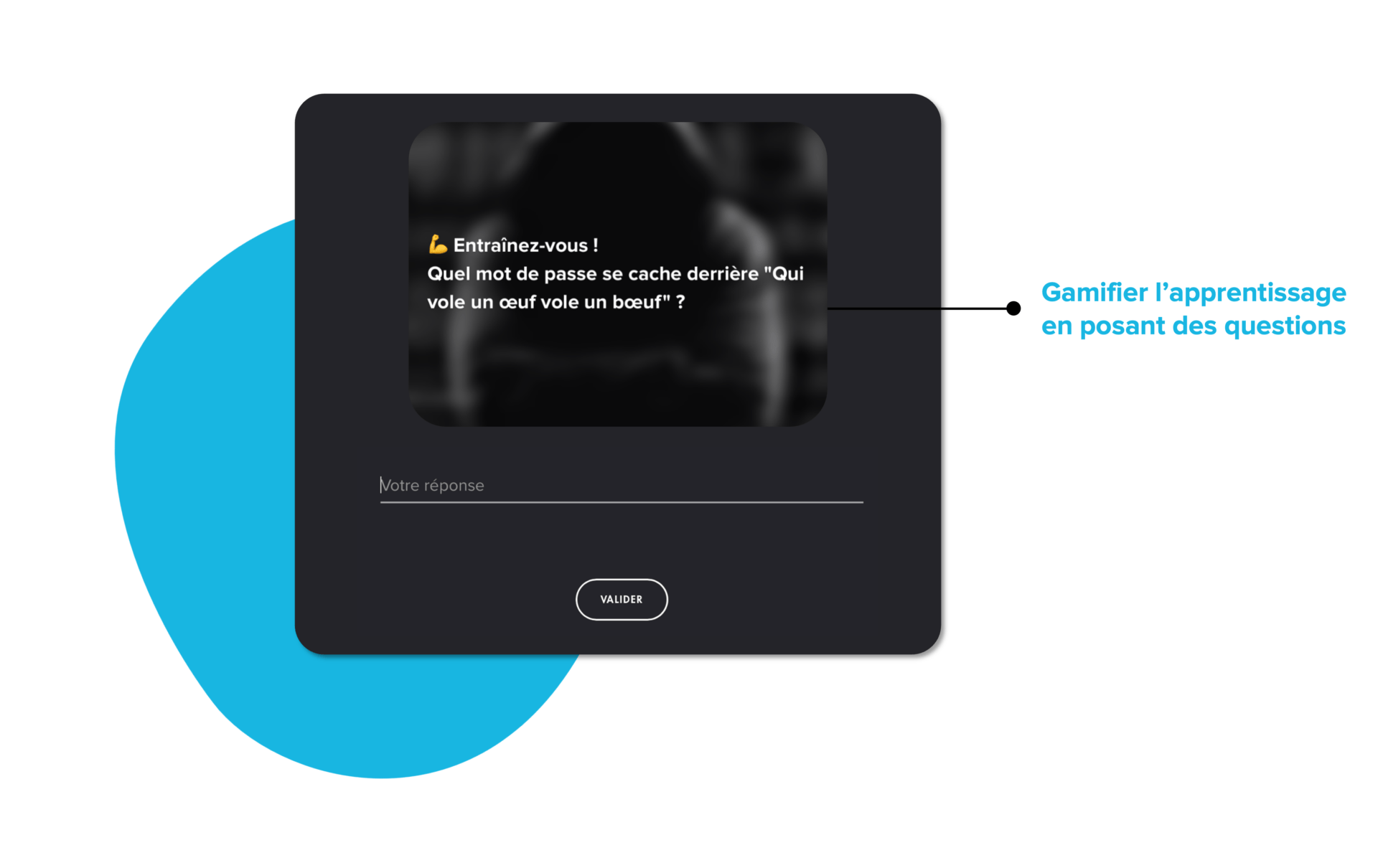
To ensure learners understand key concepts, don’t just deliver content, question them. Adding a game dimension makes the module more enjoyable, while reinforcing knowledge by rewarding correct answers.
Example: asking learners to match a definition to its rule, or to identify a key statistic that will stick in their minds.
7. Highlight interactions
Make learners active participants
Encourage learners to take an active role in their training. Give them choices, ask them to self-assess on a practice or skill, or let them adapt their learning path.
Promote social learning
Foster peer-to-peer learning by enabling asynchronous collaboration. Learners benefit from each other’s knowledge and stay more engaged through interaction.
Use Adaptive Learning
How do you address varying levels of prior knowledge in regulatory training? With Adaptive Learning and personalized experiences. Give learners the option to take different learning paths while still achieving the same level of mastery.
This is exactly what Teach Up offers: a French platform for personalized digital experiences that help everyone succeed. Our built-in AI automatically generates interactive screens at the right time, based on each learner’s level.
Want to learn more about Teach Up?
Book a meeting with one of our experts